The rental market is currently navigating an era of profound transformation. Driven by shifting demographics, remote work flexibility, and affordability ceilings, the latest Residential Tenancies Authority (RTA) data outlines a market of extremes. We are witnessing aggressive growth bleeding into previously quiet regional sectors, while historically premium markets face harsh corrections.
The Short-Term Regional Squeeze
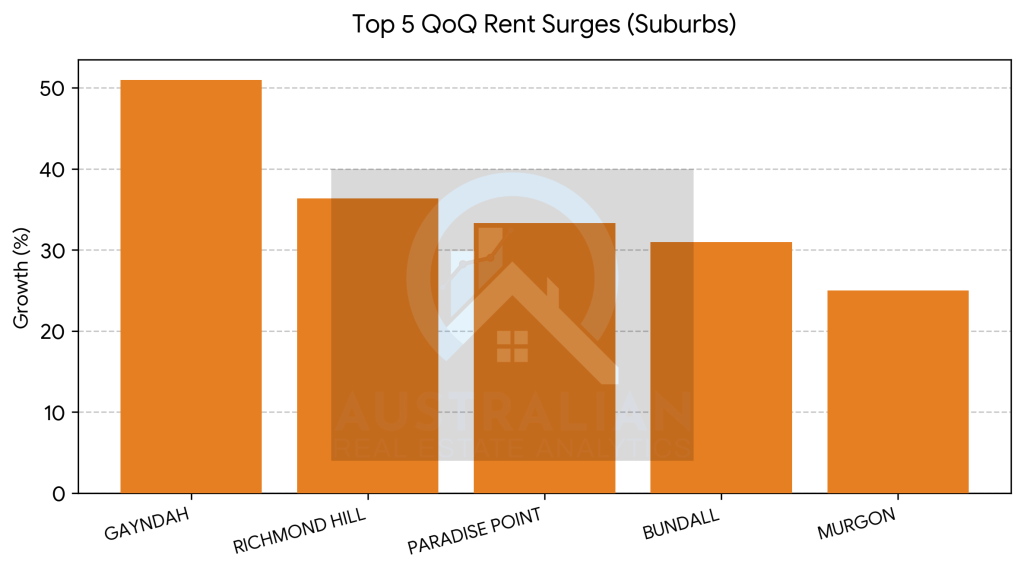
Looking at the latest quarter-on-quarter (QoQ) growth, the upward price volatility heavily favors regional hubs and sought-after coastal lifestyle properties. As remote work normalizes and urban prices peak, secondary markets are feeling the squeeze. Gayndah stands out with an astonishing 50.94% rent surge in just one quarter.
The Premium Market Reset
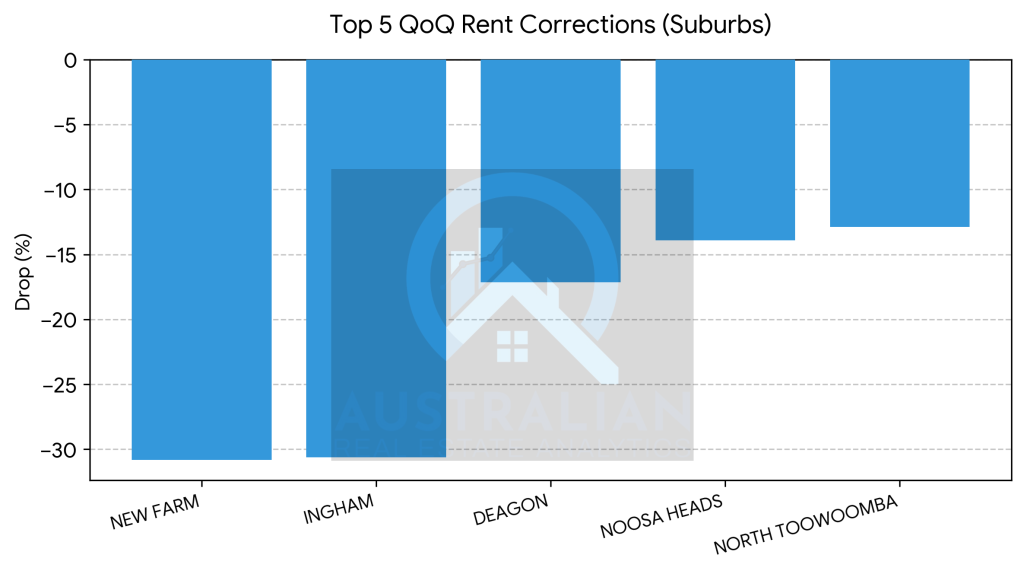
The elasticity of the premium market has snapped. In contrast to regional growth, highly sought-after inner-city and luxury locales have hit an affordability wall. New Farm experienced an extreme 30.8% drop, signaling that tenants are no longer willing—or able—to absorb the hyper-inflated rents of the past two years. QoQ is Quarter on Quarter
The Long-Term Macro Trend: A Five-Year Transformation
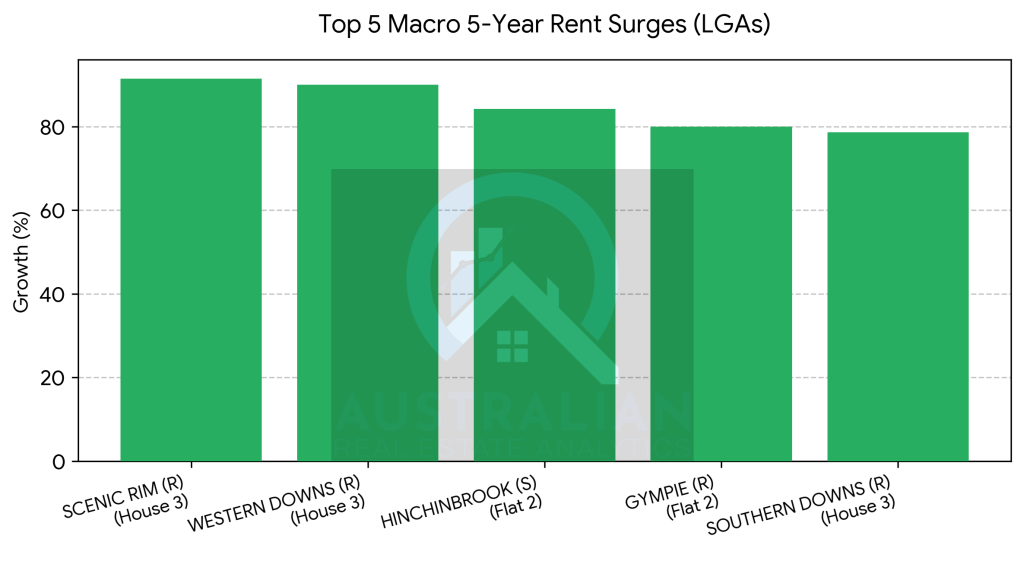
Zooming out to a 5-year perspective, the overarching narrative solidifies: regions once considered “affordable alternatives” have seen their baseline rents nearly double. Local Government Areas (LGAs) like the Scenic Rim and Western Downs have experienced over 90% growth in average house rents since 2021.
Key Takeaway: The “safe” middle ground of the rental market is rapidly diminishing. Investors and renters alike must navigate a landscape defined by high-velocity growth in semi-rural territories and swift, punishing price adjustments in former top-tier hotspots.