
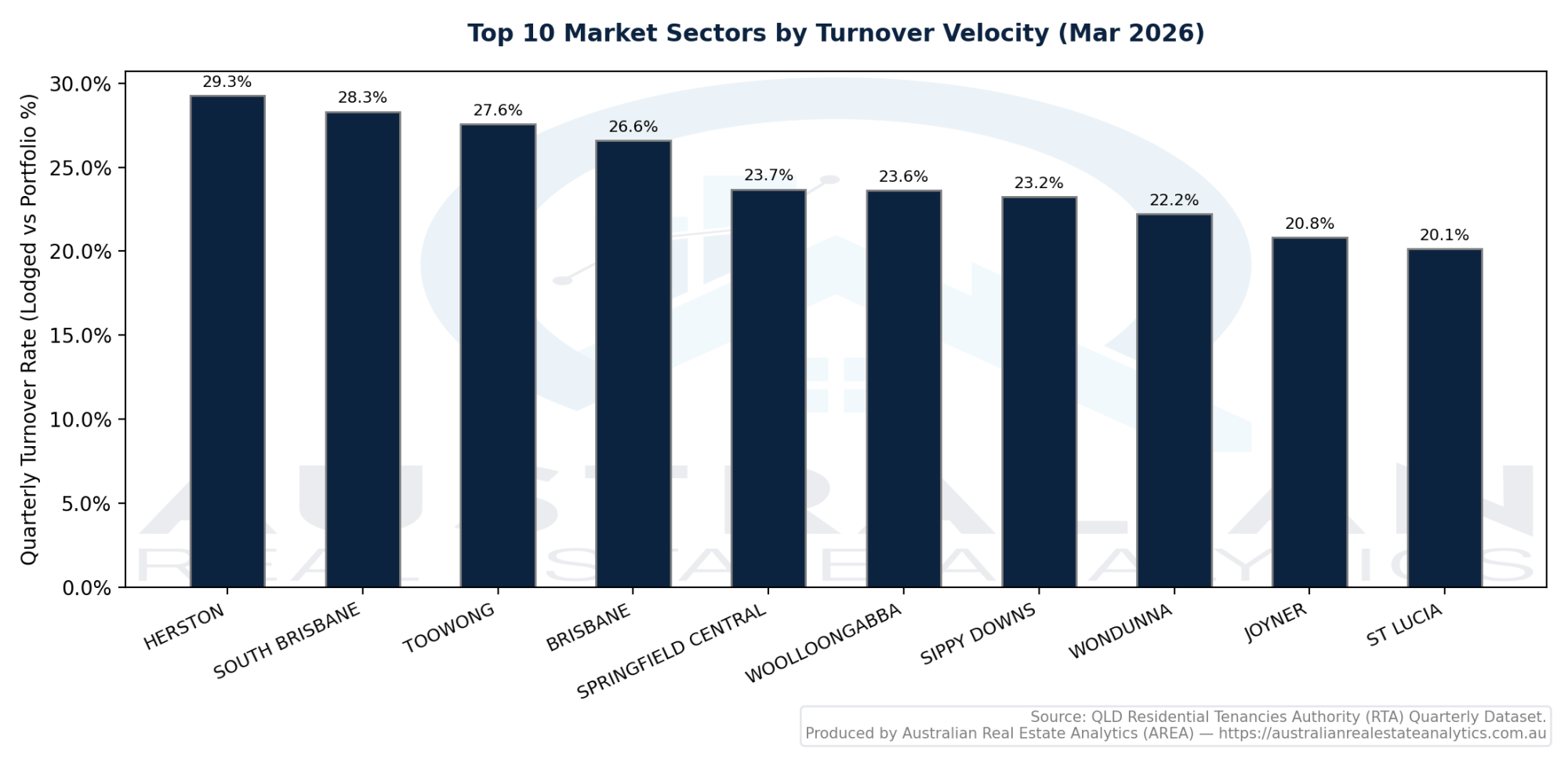
As we move into the second half of 2026, the Queensland rental landscape continues to show complex shifts in liquidity, asset class performance, and supply stability. By analyzing data from the Residential Tenancies Authority (RTA), we have identified four critical micro-signals that property stakeholders should monitor to optimize their portfolios.
1. Market Mobility: Understanding Transactional Velocity
Transactional velocity measures how quickly a rental market rotates, calculated by comparing new bond lodgements against the total managed portfolio base.
High-velocity sectors often present a paradox for investors. Suburbs such as Spring Mountain have demonstrated significant turnover, with velocity indices reaching as high as 49.57%. While high activity can signal a popular, high-demand area, it also introduces “operational friction”—landlords in these regions may face increased costs related to letting fees, marketing, and the maintenance required during frequent tenant turnovers.
2. Asset Class Divergence
Monitoring the “pricing spread” between detached houses (3-bedroom) and units (2-bedroom) offers a window into local affordability.
- Contracting Spreads: When the price gap narrows, it signals that unit values are rising faster than houses, often because local wages have hit affordability ceilings, forcing demand toward higher-density options.
- Widening Spreads: Conversely, a widening gap suggests the market is placing a higher premium on land retention, potentially penalizing high-density products.
3. Optimizing Lease Cycles
Seasonality remains one of the most reliable, yet underutilized, tools for lease management. Data analysis shows clear, recurring calendar-driven behaviors that exist independently of broader inflation waves.
The data confirms a distinct rental demand peak during the March quarter. To capitalize on this, we recommend that landlords avoid standard 12-month lease cycles that expire during the “winter softness” of June or September. Strategically utilizing 8 or 14-month lease terms can force future vacancy dates into the Q1 surge, securing premium gains without requiring additional capital expenditure.
4. The Supply Contraction Warning
Perhaps the most critical indicator for future rent inflation is the contraction of long-term rental stock. Our analysis has identified regions experiencing double-digit year-over-year percentage drops in active rental allocations:
| Location | Net Change (Units) | YoY Drop % |
| Nelly Bay | -22 | -17.3% |
| Stratford | -17 | -14.3% |
| Nebo | -19 | -12.7% |
| Mackay Harbour | -10 | -11.8% |
| Cooloola Cove | -17 | -10.4% |
Data Source: RTA Queensland Quarterly Dataset.
These contractions are a leading indicator of sharp rental spikes. As inventory disappears—either through conversion to owner-occupier homes or transition to short-term holiday platforms—the resulting choice shortfall almost inevitably exerts upward pressure on rental prices.
Strategic Takeaway: The current market environment rewards those who move beyond top-line rent growth and focus on operational efficiency. By aligning lease terms with seasonal peaks and keeping a watchful eye on regional supply contractions, stakeholders can better navigate these systemic risks and identify long-term opportunities.
Produced by Australian Real Estate Analytics (AREA). These insights are intended for strategic planning purposes.
Our full quarterly report is available at
https://australianrealestateanalytics.com.au/public/2026/rental/quarterly_analysis_apr/index.html
Beyond the Data: Bespoke Insights for Industry Professionals”
“At AREA, we understand that data is most powerful when it’s actionable. We provide bespoke analytical reports and deep-dive market articles tailored for Real Estate Agents, Mortgage Brokers, Financial Planners, and Insurance Professionals.
In an increasingly volatile market, your clients are looking for more than just a transaction—they are looking for guidance. We help you provide it by integrating our institutional-grade market intelligence directly into your client service workflow. Whether it’s hyper-local supply contraction alerts for your buyers or cyclical seasonal trends for your portfolio investors, we deliver the insights you need to build deeper, more informed client relationships.